4 August 2026 · 2 min read · The It’s an Invitation team
multi-event wedding events explained: from mayun to walima
A plain-language guide to every event in a shaadi, who usually hosts it, and what guests should expect.
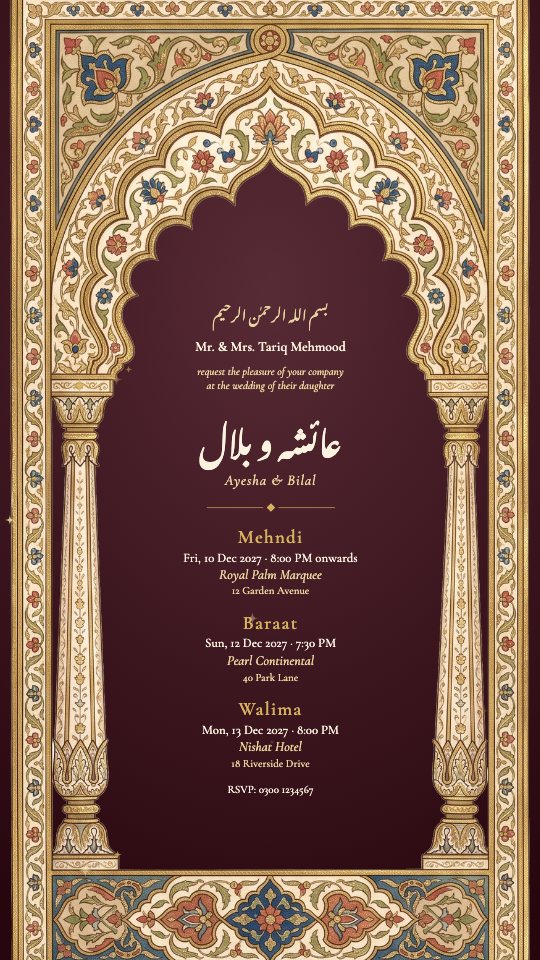
A multi-event wedding is rarely one day. It is a run of gatherings, each with its own mood, its own hosts and very often its own guest list. If you are planning one, or you have just been invited to your first, here is what each event is for.
Mayun
The quiet beginning. The bride stays home in simple yellow clothes while family apply ubtan, a turmeric paste, to her hands and face. It is small, mostly women and close relatives, and it sets the festive days in motion. Some families fold it into the mehndi; others keep it as its own afternoon.
Who hosts: the bride's family. Dress: yellow, relaxed.
Dholki
Not one event but several evenings. Cousins and friends gather around a dholak, sing wedding songs, practise dances and tease the couple. There is tea, there is food, there is usually an aunt who knows every verse.
Who hosts: anyone, often a different house each night. Dress: casual and colourful.
Mehndi
The loud one. Henna for the bride, choreographed dances, marigolds everywhere, and a colour scheme of yellow, green and orange. Traditionally the two families held separate mehndis; many now hold a joint one.
Who hosts: each side, or both together. Dress: bright. If the card names a colour, guests really do try to follow it.
Nikkah
The marriage itself. An imam leads, the couple consent three times, witnesses sign, and dua is made. It can be at a mosque, at home, or on the stage just before the baraat dinner. Families who hold it separately usually keep it intimate.
Who hosts: usually the bride's family. Dress: modest and formal; whites, pastels and golds are common.
Baraat
The groom arrives with his family, the baraat, to a welcome from the bride's side. Dinner is served, photographs take an hour longer than planned, and it ends with the rukhsati.
Who hosts: the bride's family. Dress: the most formal night. Brides traditionally wear red.
Rukhsati
The farewell: the bride leaves her parents' home with her husband, often under a Quran held above her head. It is normally the last part of the baraat rather than a separate invitation, but some families list it so that close relatives know when to gather.
Walima
The reception given by the groom's family, a day or more after the baraat, announcing the marriage to their community. Calmer, elegant, and the night the couple finally get to eat.
Who hosts: the groom's family. Dress: formal, softer colours.
Why this matters for invitations
Every one of these events can have different hosts, a different venue and a different crowd. The nikkah might be forty people; the walima, six hundred. One card for everybody does not work.
That is the idea behind how It’s an Invitation is built: you add your occasion once, then add each event with its own wording, its own design and its own guest list. A family invited only to the walima opens their link and sees only the walima. Start with your events, or browse designs by event.